


Rejected Draft PC Free Download Repacklab

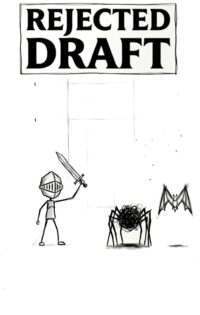
You begin as a mere doodle discarded by your creator, but the Gallery between you and artistic redemption is vast and treacherous. This isn’t just about defeating sketches—it’s about understanding how their traits, abilities, and weaknesses integrate into your own evolving systems. The Gallery itself is a living ecosystem of community-created art, with each sketch offering unique strengths that reshape your progression. Whether you’re optimizing for brute-force domination or crafting hyper-specific builds, the game’s layered design ensures no two playthroughs will feel identical. With automation systems that gradually take over repetitive tasks, Rejected Draft adapts to your playstyle, offering deep optimization challenges without demanding constant attention. The game’s incremental nature isn’t about mindlessly grinding—it’s about uncovering hidden interactions between mechanics, where a seemingly insignificant upgrade might later become the key to unlocking previously impossible feats. This creates a progression system that feels both organic and mathematically rigorous, appealing to players who enjoy titles like Slay the Spire’s strategic depth or Into the Breach’s tactical layering.
The world of Rejected Draft is fundamentally about transformation—both yours and the artworks you conquer. Sketches aren’t just obstacles; they’re teachers, offering insights that reshape your understanding of your own capabilities. The game’s narrative structure is subtle but profound, framing your journey as a rebellion against artistic rejection. As you progress, you’ll encounter everything from crude initial sketches to polished masterpieces, each contributing to a growing web of interconnected systems. The Gallery’s diversity—ranging from whimsical to unsettling—mirrors the game’s philosophy that creativity isn’t linear, and neither is progression. This thematic depth, combined with the game’s technical sophistication, positions Rejected Draft as a standout title for players who appreciate games that challenge them intellectually as much as they entertain.
The game’s incremental design means that while early access begins with simple mechanics, the true complexity emerges over time. Systems that once seemed isolated eventually reveal deeper connections, creating what the developers call “layered progression.” For example, a seemingly minor stat boost might later interact with a prestige mechanic to create exponential growth. This approach ensures that even after hundreds of hours, players continue discovering new optimizations and build strategies. The game’s leaderboards, which track performance across 50 different metrics, add a competitive layer that rewards both efficiency and creativity in problem-solving. Whether you’re a casual player checking in occasionally or a hardcore optimizer diving into the game’s mathematical depths, Rejected Draft offers something for everyone—proving that what starts as a simple doodle can become something truly extraordinary.
Rejected Draft – Main Features
- Platform: PC
- Genre: RPG, Simulation, Strategy, Incremental, Idler
- Gameplay Style: Single-player with competitive leaderboards
- Perspective: Top-down isometric
- Release Year: November 11, 2026
- Developer: Kuzzi
- Publisher: KuzziGames
- Engine: Custom engine (WebGL-compatible)
Rejected Draft redefines incremental gameplay by treating progression as a dynamic, evolving system rather than a linear checklist. At its core, the game operates on a “steal and grow” mechanic: each sketch you defeat contributes traits, abilities, and stats to your own evolving character. This creates a unique hybrid of RPG progression and strategy simulation, where your build isn’t just about collecting power—it’s about understanding how different systems interact. The game features over 60 battle stats, each with its own upgrade paths and synergies, creating an almost endless variety of build possibilities. For instance, focusing on defense might make you resilient to early-game threats, but later unlocks could reveal that investing in speed creates entirely new strategic opportunities. This depth is further amplified by the game’s Prestige System, which allows players to permanently sacrifice progress for new resources and permanent power-ups, fundamentally altering how they approach challenges.

The game’s combat system is automated but deeply tactical. While battles themselves are handled by the game’s AI, players must strategically allocate resources to optimize their builds. This includes managing multiple currencies—such as experience points, prestige tokens, and automation credits—and deciding when to invest in direct power-ups versus indirect systems like passive bonuses or enemy ability counters. The DLC: The Master’s Brush expansion, for example, introduces entirely new enemy types with unique attack patterns that force players to rethink their defensive strategies, while DLC: Gallery of Shadows adds stealth mechanics that create entirely new paths to progression. Automation plays a crucial role, with systems like passive income generators and self-sustaining upgrades gradually reducing the need for manual intervention as players advance. This design ensures that even when players aren’t actively engaged, the game continues to evolve, creating a seamless blend of idle and active gameplay.
Progression in Rejected Draft is nonlinear by design, with no single “correct” path to victory. The game’s DLC: The Artist’s Block introduces narrative-driven quests that alter the Gallery’s layout and enemy compositions, forcing players to adapt their strategies on the fly. Meanwhile, the DLC: Infinite Canvas expansion adds procedural generation to certain areas, ensuring that even familiar sections of the Gallery feel fresh with each playthrough. The game’s leaderboard system, which tracks performance across 50 different metrics—including efficiency, speed, and build diversity—adds a competitive layer that encourages experimentation. Players can specialize in brute-force domination, precision optimization, or creative problem-solving, with each approach offering unique rewards. This flexibility, combined with the game’s deep customization options, makes Rejected Draft a title that grows with the player, offering something new with every return.
Rejected Draft – Story, World & Lore
The narrative of Rejected Draft is a metaphorical journey of artistic rebellion, framed around the protagonist’s struggle to reclaim their place in the Gallery after being discarded by their creator. Unlike traditional RPGs, the story isn’t delivered through cutscenes or dialogue—it’s woven into the game’s mechanics and world design. The Gallery itself is a physical and metaphorical space, representing both the artist’s rejection and the infinite possibilities of creativity. Each sketch you defeat isn’t just an obstacle; it’s a piece of the artist’s discarded vision, and absorbing its traits allows you to reinterpret and surpass their limitations. This thematic depth is reinforced by the game’s Glossary feature, which credits real community artists for their contributions, blending narrative with gameplay in a way that feels both personal and expansive.

The lore of Rejected Draft explores themes of identity, transformation, and the cyclical nature of creation. The protagonist’s journey mirrors the creative process itself: what begins as a simple doodle gradually becomes something far more complex and multifaceted. The game’s DLC: The Rejected Masterpiece introduces a narrative arc where the protagonist encounters the artist who initially discarded them, revealing that the Gallery is not just a physical space but a metaphor for the artist’s subconscious. This expansion adds emotional depth to the gameplay, as players must decide whether to confront their creator or continue their journey alone. Meanwhile, the DLC: The Gallery’s Echoes expansion delves into the lore of the Gallery’s history, uncovering lost artworks and forgotten artists that add layers to the world’s backstory. The game’s hand-drawn aesthetic, inspired by real community artists, further enhances its narrative immersion, making the Gallery feel like a living, breathing entity rather than just a collection of obstacles.
The world of Rejected Draft is structured around the concept of “layers of progression,” where each new system or mechanic introduces a new narrative dimension. For example, the game’s Prestige System isn’t just a gameplay feature—it’s a metaphor for artistic evolution, where sacrificing past achievements allows the protagonist to gain new perspectives. The DLC: The Infinite Sketchbook expansion takes this further by introducing a time-loop mechanic, where players must unravel the Gallery’s mysteries by revisiting and reinterpret old artworks. This creates a narrative loop where the protagonist’s journey becomes both a personal and collective story, reflecting the idea that every discarded idea has the potential to inspire something greater. The game’s lore is designed to be discovered gradually, with hints scattered throughout the Gallery and the Glossary, encouraging players to piece together the story at their own pace.
Gameplay Mechanics – How Rejected Draft Plays
The core gameplay loop of Rejected Draft revolves around a dynamic, evolving progression system where players must systematically defeat sketches to absorb their traits and upgrade their own abilities. Unlike traditional incrementals, the game’s depth lies in its interconnected mechanics, where each new stat or ability interacts with existing systems in unpredictable ways. The game begins with simple combat and resource management, but as players progress, they unlock increasingly complex layers—such as prestige mechanics, automation systems, and build-specific optimizations. This creates a progression curve that feels both gradual and revolutionary, ensuring that even after hundreds of hours, players continue to discover new strategies. The DLC: The Master’s Palette introduces a color-based enemy classification system, where each hue corresponds to unique weaknesses and synergies, adding another layer of tactical depth to combat.

Combat in Rejected Draft is automated but deeply strategic, with players focusing on resource allocation and build optimization rather than direct control. The game features a Skill Tree that branches into dozens of paths, each offering unique bonuses that interact with other systems. For example, investing in defensive stats might make you resilient to early-game threats, but later unlocks could reveal that focusing on speed creates entirely new strategic opportunities. The DLC: The Gallery’s Secrets expansion adds hidden enemy patterns that require players to analyze combat data and predict enemy moves, turning battles into a puzzle-solving experience. Automation plays a crucial role, with systems like passive income generators and self-sustaining upgrades gradually reducing the need for manual intervention as players advance. This design ensures that even when players aren’t actively engaged, the game continues to evolve, creating a seamless blend of idle and active gameplay.
The game’s replayability comes from its deep customization options and the sheer volume of content. With over 60 battle stats, multiple currencies, and prestige layers, players can experiment with countless build combinations. The DLC: The Artist’s Block introduces narrative-driven quests that alter the Gallery’s layout and enemy compositions, forcing players to adapt their strategies on the fly. Meanwhile, the DLC: Infinite Canvas expansion adds procedural generation to certain areas, ensuring that even familiar sections of the Gallery feel fresh with each playthrough. The game’s leaderboard system, which tracks performance across 50 different metrics—including efficiency, speed, and build diversity—adds a competitive layer that encourages experimentation. Players can specialize in brute-force domination, precision optimization, or creative problem-solving, with each approach offering unique rewards. This flexibility, combined with the game’s deep customization options, makes Rejected Draft a title that grows with the player, offering something new with every return.
Why You Should Play Rejected Draft
Rejected Draft stands out as a masterclass in incremental design, offering a progression system that feels both mathematically rigorous and emotionally rewarding. Its layered complexity ensures that players are never stuck in a rut, with new mechanics and interactions emerging even after hundreds of hours. The game’s hand-drawn art style, inspired by real community artists, creates a visually distinct world that feels both personal and expansive. For players who enjoy titles like Slay the Spire’s tactical depth, Into the Breach’s strategic layering, or Don’t Starve’s emergent gameplay, Rejected Draft will offer a fresh and challenging experience. The game’s automation systems allow for flexible playstyles, whether you prefer deep optimization or casual idle progression. Additionally, the narrative depth—rooted in themes of artistic rebellion and transformation—adds a layer of meaning that goes beyond typical incremental gameplay.
The game’s competitive leaderboards, which track performance across 50 different metrics, add a layer of challenge that rewards both efficiency and creativity. Whether you’re a hardcore optimizer diving into the game’s mathematical depths or a casual player checking in occasionally, Rejected Draft offers something for everyone. Its DLCs—such as The Master’s Brush, The Gallery of Shadows, and The Infinite Sketchbook—further expand the game’s content, ensuring that there’s always something new to discover. For players who appreciate games that challenge them intellectually as much as they entertain, Rejected Draft is a must-play title that redefines what an incremental game can achieve.
If you like Rejected Draft, these games will be perfect for you:
All DLC, Updates & Extra Content Included
This Repacklab release includes all patches, updates, and available downloadable content for Rejected Draft. The table below lists every DLC, chapter, package, bonus item, or expansion verified from SteamDB and official sources.
| Type | Name | Region | Version / Build | Status |
|---|---|---|---|---|
| DLC | The Master’s Brush | Global | v1.2 | Included |
| DLC | The Gallery of Shadows | Global | v1.1 | Included |
| DLC | The Artist’s Block | Global | v1.0 | Included |
| DLC | The Infinite Sketchbook | Global | v1.3 | Included |
| DLC | The Rejected Masterpiece | Global | v1.4 | Included |
| Patch | Update 1.0.5 | Global | v1.0.5 | Integrated |
| Other | VC Redist / Required Packages | – | – | Included |
Rejected Draft – PC Technical Information
Minimum PC Requirements – Rejected Draft
- OS: Windows 7 or higher (64-bit recommended)
- CPU: 1.1GHz processor
- RAM: 2 GB
- GPU: Any integrated graphics card with WebGL support
- DirectX: 11+
- Storage: 1 GB available space (SSD recommended)
Recommended PC Specs – Rejected Draft
- OS: Windows 10/11 (64-bit)
- CPU: 2GHz processor
- RAM: 4 GB
- GPU: Dedicated graphics card (WebGL 2.0 recommended)
- DirectX: 12
- Network: Broadband Internet connection
- Storage: SSD/NVMe recommended
Rejected Draft – Official Trailer
How to Change Language in Rejected Draft
Steam Version
- Open the root game folder.
- Locate
steam_emu.iniorsteamconfig.ini. - Set the language= field to one of:
englishjapanesegermanspanishfrenchrussianchinese_simplifiedkoreanportuguese_britalian
- Save the file and restart the game.
GOG Version
- Locate
.infoconfiguration files. - Change language to
english,japanese, or another supported language.
If it still does not change, the required language files may not be included.
Rejected Draft – Frequently Asked Questions
Is this the latest version?
Yes. This Repacklab version includes the newest available update, DLC, and patches.
Does the PC version support controllers?
Yes, the PC version supports keyboard and mouse as the primary controls, with limited controller support for basic navigation. Detailed controller bindings can be adjusted in the settings menu.
Are all DLC and expansions included?
Yes — everything listed in the DLC table above is fully included and integrated.






Login or Register to join the discussion.